
What to Do With Inherited Jewellery You Never Wear
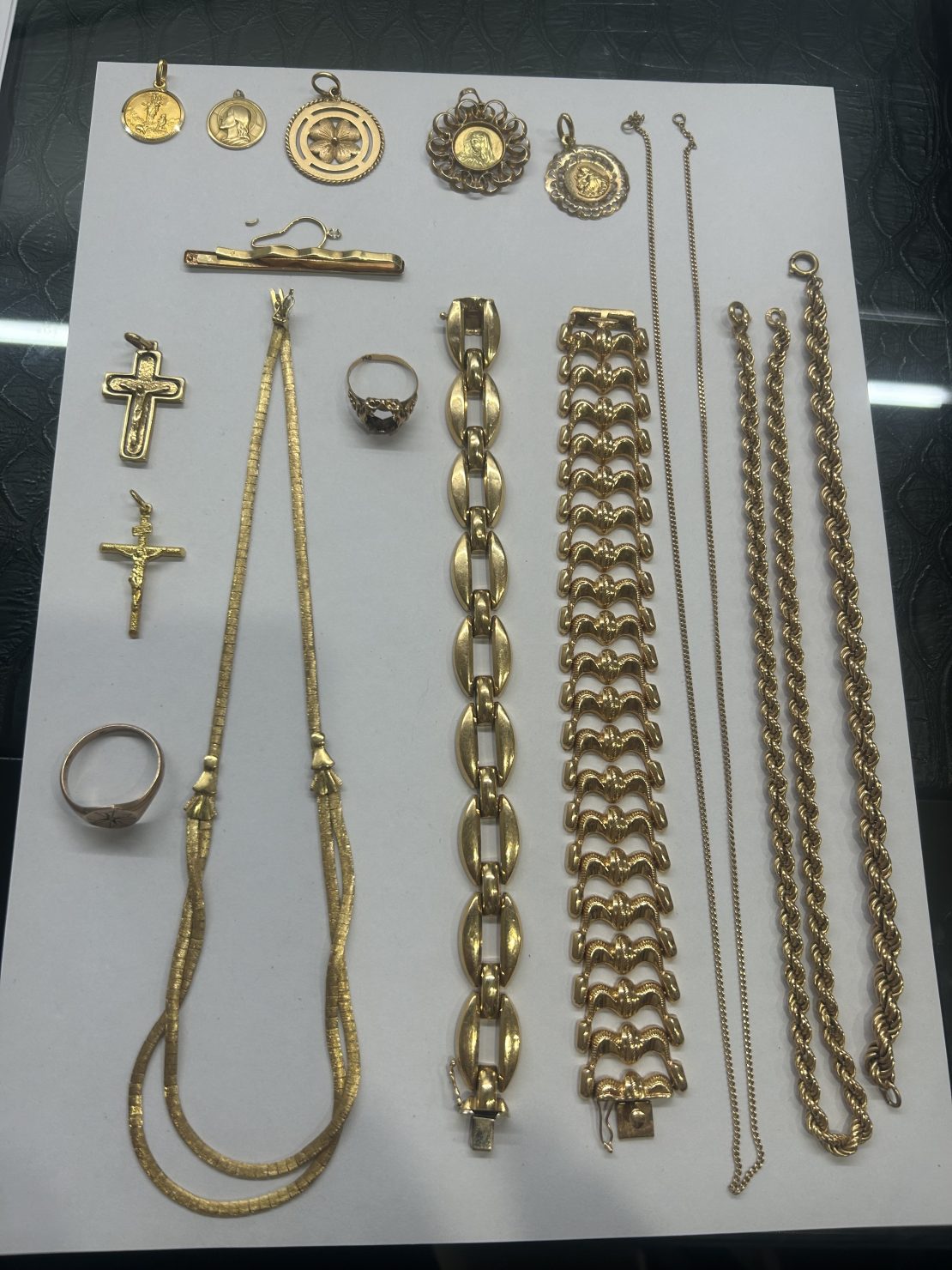
It tends to arrive at a complicated moment. A parent passes, or a grandparent, and among the practical things to sort through — the paperwork, the furniture, the clothes — there are jewellery boxes. Rings. Chains. Brooches. Pieces you remember from childhood, pieces you never saw worn, pieces whose stories you only half know.
Some of it you’ll treasure immediately. But some of it will go into a drawer, or a keepsake tin, or back into the velvet box it came in — and stay there. Not because it doesn’t matter, but because it doesn’t quite fit who you are, or the way you live, or the style of jewellery you actually wear.
If this sounds familiar, you are not alone. And you are not facing a choice between wearing something that doesn’t feel like yours and simply leaving it to sit untouched.
There is a third option — and it’s one that preserves the meaning of what you’ve inherited while creating something you will genuinely reach for.
The Guilt of Not Wearing It
There’s a particular kind of quiet guilt that comes with inherited jewellery. It’s not dramatic. It’s more like a low-level awareness — a sense that something precious is sitting in a box when it should be worn and seen and loved. You know it meant something to someone. You know the quality is there. And yet every time you open the box, you close it again.
The guilt usually isn’t about the jewellery itself. It’s about the style — a ring design that belongs to a different era, a brooch that has no obvious place in your life, a necklace that is undeniably beautiful but simply not something you would choose for yourself. It can also be about weight: the piece has so much meaning attached to it that the idea of changing it feels wrong, even when keeping it as it is means it never gets worn at all.
What’s worth recognising is that leaving a piece in a drawer doesn’t honour the person who gave it to you. Wearing it does. And wearing it doesn’t require it to look exactly as it did when it was handed to you.
What Jewellery Remodelling Actually Means
Jewellery remodelling is the process of taking an existing piece — or several pieces — and transforming them into something new. The materials remain yours. The gold is melted down and reused. The diamonds and gemstones are carefully removed, assessed, and reset into a new design. What changes is the form. What stays is the substance — and the story.
This is different from simply having a piece repaired, or from buying something new. Remodelling is a creative process, and a deeply personal one. It starts with understanding what the piece means to you, what you’d like it to become, and how you want to wear it. It ends with something that is both genuinely new and genuinely yours — carrying the material history of the original piece into a design that belongs entirely to your life.
The most common inherited pieces that come to us for remodelling at Franco Jewellers are rings — particularly engagement rings and dress rings from earlier decades. But we also work with chains and pendants, brooches whose stones deserve a second life, collections of smaller pieces that carry little individual value but are meaningful as a group, and single stones — diamonds, sapphires, rubies, emeralds — that have been sitting loose in a box for years waiting for the right setting.
When Remodelling Is the Right Choice
Remodelling makes most sense when the following are true: the piece has genuine sentimental value, the materials are of good quality, and the design is what’s standing between you and wearing it.
If a ring belonged to your grandmother and the stone is beautiful but the setting is from the 1960s, remodelling allows you to keep the stone — the part that holds the meaning — and build a setting around it that reflects who you are in 2026. You are not erasing her. You are carrying her forward.
If you have inherited multiple small pieces — several thin gold rings, for example, or a collection of pendants — they can sometimes be combined into a single more substantial piece. The gold is pooled. The stones are considered collectively. Something new emerges that wouldn’t have been possible from any single piece alone.
If the piece is simply too painful to wear as it is — a ring from a relationship that ended, or a piece associated with grief — remodelling can create a kind of necessary distance. The material remains, the memory softens into something you can carry more gently, and a new piece takes shape that is associated with your decision to move forward rather than with the original loss.
What to Expect When You Bring a Piece In
The remodelling process at Franco Jewellers begins with a conversation, not a commitment. You bring the piece — or pieces — into our Collins Street boutique and sit with Silvana or Daniela. There is no pressure to proceed with anything, and no obligation beyond the conversation itself.
What matters in that first meeting is the story. Where did the piece come from? What does it mean to you? What kind of jewellery do you actually wear day to day? Are you drawn to something simple and modern, or do you want to retain some of the character of the original? Is there a specific occasion you’re designing for, or is this simply about creating something you’ll wear because you love it?
From there, our master jeweller assesses the piece. The condition of the metal and stones is evaluated. Any limitations — a stone with existing damage, a metal that needs supplementing — are explained clearly before any design decisions are made. Nothing is assumed, and nothing proceeds without your full understanding and written approval.
Design concepts follow: sketches, and for more complex pieces, CAD renderings so you can see the finished piece before a single thing has been touched. You refine, you respond, and the design evolves until it’s right. Then the work begins — all of it in-house, in our workshop on Collins Street, by the same master jeweller who has been creating custom pieces for over 25 years.
When your piece is ready, you come in to collect it. That moment — seeing what was sitting unused in a drawer transformed into something beautiful and wearable — is one of the most rewarding parts of what we do.
Common Questions People Ask Before Starting
Will I lose the sentimental connection if it’s redesigned?
This is the question we hear most often, and it’s worth addressing directly. The material of the original piece — the gold, the diamonds, the gemstones — is preserved throughout the remodelling process. What changes is the design. The stone your grandmother wore, or the gold from your mother’s ring, is physically present in the new piece. Many of our clients find that this connection deepens rather than diminishes after remodelling — because the piece is now something they actively wear and engage with, rather than something stored away.
What if I’m not sure what I want the new piece to look like?
Most people who come to us for remodelling have only a vague idea of what they want. That’s entirely normal. Silvana and Daniela are experienced at drawing out preferences through conversation — asking about jewellery you already wear, styles you’re drawn to, occasions you’re designing for. You don’t need to arrive with a vision; you just need to arrive. The vision develops through the consultation.
Is jewellery remodelling expensive?
The cost of remodelling depends on the complexity of the design and the amount of new material required. Because remodelling reuses the existing gold and stones, the material costs are often significantly lower than commissioning a new piece from scratch. In many cases, the existing material covers the majority of what’s needed, and only labour and minor additional materials are required. We provide a written quote after the initial assessment, with no surprises and no work beginning without your approval.
What if the piece can’t be remodelled?
It’s rare, but occasionally a piece has limitations — a stone that is too damaged to reset, or a metal that can’t be worked with in the way envisioned. If this is the case, we will tell you clearly at the assessment stage, before any design conversation takes place. We would rather give you an honest answer early than create expectations we cannot meet.
A Different Kind of Inheritance
Jewellery has always been one of the ways human beings carry each other forward. The ring your grandmother wore at her own wedding. The necklace your mother bought for herself when she turned forty. The diamond your father gave to mark a moment you never knew about. These pieces carry lives inside them.
Remodelling doesn’t erase that. It extends it — into your hands, your style, your story. The piece that was sitting in a drawer becomes something you wear to work, or on a significant occasion, or every single day. And when someone asks where it came from, you’ll have an answer that is both old and new at once.
If you have inherited jewellery that deserves to be worn, we’d love to help you find out what it could become. Bring it in to Franco Jewellers on Collins Street for a complimentary conversation with Silvana or Daniela — no obligation, no pressure, just an honest discussion about your piece and its possibilities.
You can read more about our jewellery remodelling service — including the full process, the types of work we do, and answers to common questions — or book a free consultation directly at https://staging.franco.com.au/book-an-appointment/.
We also offer expert jewellery repairs for pieces that simply need restoration rather than reinvention — and a full custom jewellery design service for clients starting from scratch.
Franco Jewellers is located at Suite 904, Manchester Unity Building, 220 Collins Street, Melbourne. Walk-ins are welcome Monday to Saturday, 11am–4pm. Call (03) 9564 7755 or email franco@franco.com.au to arrange an appointment.